Friday, October 10, 2008

The Great Planetary Robbery

I'm a total sucker for spaceships. If a book has a starship or even a rocket ship on its cover, I can't help myself. I must pick it up and check it out. The only exceptions for my spaceship mania are all those godawful Star Trek paperbacks which, more often or not, are a shameful waste of good paper. I love the TV shows and the movies, but I absolutely abhor the Trek books.

My spaceship mania paid off recently when I discovered The Great Planetary Robbery by Craig DiLouie, an entertaining space-opera comedy with a touch of military science-fiction, too. The story reminded me very much of some of the classic Traveller role-playing scenarios where a band of rag-tag space voyagers set off into the galaxy to seek their fame and fortune.

Near the end of their service careers, Colonial Space Marine NCOs Lawrence Dobbs and Timothy Muldoon organize a motley team of adventurers on a private mission to a legendary lost world abundant with riches. Their career hitches are actually over 800 years long due to the effects of star travel's time dilation. Along the way, Dobbs and Muldoon come up against a whacked-out hacker and his computer viruses, a combat assassin android named Bova, galactic bounty hunters, millions of hostile aliens, and the insane AI simulacrum of the emperor of a long-extinct enemy alien civilization.

The Great Planetary Robbery is a lot of fun, and I hope author DiLouie will let us continue to follow Dobbs and Muldoon in more cosmic hijinks … in the future.

D'os Vadanya,

VIKTOR KUPRIN

Technorati tags: , , , , , , ,

Labels: , , , ,

Thursday, June 26, 2008

Summer Reading List and Time Off

I survived the terrible weather and floods that devastated so much of southern Indiana, though my dear wifey did the splits on a wet kitchen floor after the deluge. And I've just learned that I will be getting an unexpected summer break due to the fact that I'm headed to surgery tomorrow. The diagnosis is a double (!) hernia, probably from lifting some heavy computer gear at work. Except for the removal of an infected lymph node many, many years ago due to Cat Scratch Fever (but not the kind Ted Nugent sang about), I've never had surgery or undergone general anesthesia. It will be a new experience for me.

And while I'm flat on my back in recovery, I'll be reading these books, my early-summer reading list:

TWO OF MINDS by William H. Keith Jr., set in the Wizard's of the Coast Alternity universe. Bill is one of my favorite authors, and is well-known by gamers for his art and fiction that defined the first edition of the Traveller SF role-playing game. This novel has a strong "Traveller" feel to it, and the area of space called "The Verge" is an interesting though dark and dangerous setting.


STRONG-ARM TACTICS by Jodie Lynn Nye. Published by the now-defunct Meisha Merlin, I found a copy of this laced-with-humor milfic novel at my local library. I had the pleasure to briefly meet Jodie at the recent Duckon SF convention, but was totally embarassed when I had to leave her Writing Narrative Hooks workshop before it was over. In my defense, my dear wifey had re-injured her leg while lifting luggage in our hotel room and needed my help in the worst way, so it really, really was an emergency. Family comes first, of course, but I still felt awful about having to bug out as I did. Sorry, Jodie.


THE ETERNITY ARTIFACT by L.E. Modesitt Jr.. I love first contact stories and this tale of an extra-galactic expedition to study an artificially-propelled planetoid created by aliens is my kind of story.


HAL SPACEJOCK by Simon Haynes. For the fun of it, this Australian SF comedy series is perfect for a relaxing summer read. The first of four novels about this clutzy space adventurer is available as a free download at HS Hal Spacejock.


Before going through my pre-surgery tests yesterday, I had some time waiting in the hospital lounge. To my delight I found a copy of The Best From Galaxy Volume IV, edited by Jim Baen, resting on an end table as if it was waiting for me to come pick it up. There was even two Jerry Pournelle stories inside: Tinker, a short tale about life in the Asteroid belt, and a non-fiction piece about life in space. I hope this is a good omen for my upcoming time under the surgeon's knife.


Viktor Kuprin

Technorati tags: , , , , , , , ,

Labels: , , , , , , ,

Friday, May 30, 2008

Marcon, William H. Keith, and now on DVD: The Invaders - Season 1

The Marcon SF convention in Columbus, Ohio, was great fun last weekend, though everyone was saddened by the unexpected death of author guest-of-honor Robert Asprin just before the event. Though I was not a reader of his work, I join everyone who mourn his passing. A lesser disappointment for my six-year-old son was the lack of a swimming pool at the downtown Hyatt hotel, but otherwise it was an excellent con.

William H. Keith - Author and Artist

The highlight of the convention for me was getting to meet author and artist William H. Keith Jr., whose work I have followed more years than I care to admit. Bill has had over 80 books published, plus short stories, role-playing games, source books, and lots of fantastic SF art for the Traveller SF role-playing game. Along with his late brother, Andrew Keith, Bill was responsible for much of the "look" of Traveller, and his spacecraft designs are some of my favorites. I was very happy to see some dazzling prints of Bill's graphics at the Marcon art show, and I managed to come home with a great piece by Bill depicting a "Retro Launch" rocket boosting into space. Fact is, I'm in the middle of reading Bill's latest military SF novel, Star Strike, done under the penname of Ian Douglas. His military techno-thrillers (Silent Service; Seals, The Warrior Breed) are done under the H. Jay Riker moniker. Bill is scheduled to appear at Pittsburgh's Confluence con, July 25-27, and if the planetary orbits line up just right, I may make it there, too.

The Invaders - Season 1

The Invaders, alien beings from a dying planet. Their destination: the Earth. Their purpose: to make it their world. David Vincent has seen them. For him, it began one lost night on a lonely country road, looking for a shortcut that he never found. It began with a closed deserted diner, and a man too long without sleep to continue his journey. It began with the landing of a craft from another galaxy. Now David Vincent knows that the Invaders are here, that they have taken human form. Somehow he must convince a disbelieving world that the nightmare has already begun.

That was how each episode of the 1967-68 SF-horror series The Invaders started, and I'm very happy to report that the first season of that classic Quinn-Martin production was released on DVD this week. Dominic Frontiere's eerie soundtrack still gives me chills. He also scored the original opening and closing themes for The Outer Limits, another sixties SF-horror classic. The Invaders featured ruthless aliens (disguised as humans), great hardware (flying saucers, disintegrator pistols, and the "cerebral hemorrhage" disc weapon), suspenseful stories, and fine actors. I remember watching the episode where guest star Michael Rennie, from The Day The Earth Stood Still, played the role of an important alien leader, a real touch of class by the program's casting director. And though subtle compared to modern standards, I remember many scenes involving the disguised aliens that were very frightening. David Vincent might notice the tell-tale imperfect pinky finger of an alien-in-disguise, the eerie alien theme music would play, and the expressionless alien would make eye contact with Vincent, look directly into the camera. Scenes like that scared the bejeezus out of me more than once when I was a kid, I shamelessly admit. Roy Thinnes, the show's star, was often panned by the critics, but I was always impressed by his serious-as-hell, on-the-edge performance as one man unintentionally made aware of a covert invasion by cold, murderous aliens. Bravo to Paramount for releasing The Invaders on DVD. It's certainly one of the best American SF television series made in the sixties.

D'os Vadanya,

Viktor Kuprin

Technorati tags: , , , , , , , , , ,

Labels: , , , , , , , , , ,

Wednesday, March 05, 2008

Jerry Pournelle's There Will Be War

From the Associated Press
4-March-2008

WASHINGTON, D.C.

Congressional Democrats are taking a closer look at the U.S. missile defense program, partly in an effort to pare down its high price tag.

The Democrats are raising questions about the effectiveness of the anti-missile program and investigating whether its testing regimen is realistic enough to demonstrate its capabilities against real attacks.

Critics have long contended that the program's tests are too predictable.

The scrutiny comes as the United States is at a sensitive moment in negotiations with Poland and the Czech Republic to build part of its shield on their territory. Lawmakers are questioning the security value of those plans against stark opposition from Russia.


That story in yesterday's news is very timely for me because I've been reviewing some of the past works of one of my favorite authors: Jerry Pournelle. The Mote In God's Eye by Larry Niven and Jerry Pournelle is probably my all-time favorite science fiction novel, undoubtedly one of the best first contact stories ever written. I first read it in 1975 while stationed at March Air Force Base in sunny, southern California. That was when the Cold War was heating up again as the Soviet Union built up its military forces to alarming levels. My unit was a B-52 bomber wing, part of the Strategic Air Command, and I always thought my modest contribution to national defense had some merit. I felt that way because I knew that somewhere in Siberia there was probably some Russian gomer much like me assigned to their Long-Range Aviation, at some Tu-95 Bear bomber base.

One thing about Jerry Pournelle: he hated strategic deterrence, the whole concept of Mutually Assured Destruction, gleefully called MAD by its detractors. The idea of two superpowers pointing their nuclear weapons at each other with no real defense against them did make for some awful nightmares and many a good science fiction story. But (I believe) it kept the peace. It worked. I will always believe that the stakes of that awful game had to be high to keep it honest, else one side or the other would get the notion that a nuclear war was somehow justifiable, or winnable.

History has not been kind for much of Jerry Pournelle's written works, but they are still a great pleasure to read. I consider his CoDominion stories to be some of the best, a future history where the USA and USSR grudgingly join to share world control, stifle scientific research and development, and, much later on, have an amazing encounter with "intelligent life from off the Earth," to quote Dr. Haywood Floyd in 2001: A Space Odyssey.

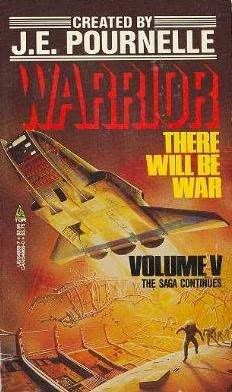
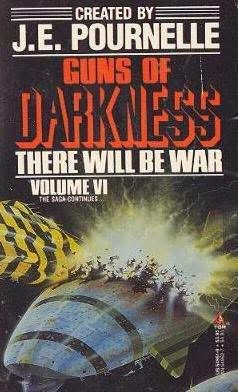
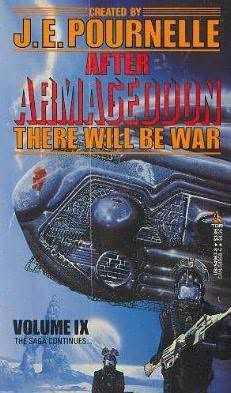
Over the past few weeks I've been reading some of Jerry Pournelle's There Will Be War book series, which was co-edited by John F. Carr. Filled with collected short stories, poetry, and political essays by various authors, the series served as a bully pulpit for Jerry and his conservative views. One common theme was his call for the construction of the original Strategic Defense Initiative (SDI), often referred to as "Star Wars" during the Reagan era. In almost every issue of There Will Be War, Jerry would demand a crash development program for anti-missile lasers, interceptor missiles, "brilliant pebbles" orbital weapons and such, so that the US would move away from Mutually Assured Destruction to an Assured Survival defense against Soviet nuclear weapons. To be frank, I never believed it would work for the main reason that so much of SDI would be easily thwarted with countermeasures, decoys, and other inexpensive, low-tech alternatives. And, of course, it never had to be because the Soviet Union imploded and ceased to be.

I am still skeptical when I read about the recent anti-missile test shots firing out of Kwajalein, and I surely don't want the US to spend billions of dollars for an anti-missile defense that may or may not work as advertised. Do we really need to spend mega-billions to counter a dubious threat from North Korea or Iran? Surely there's far better ways to spend those Pentagon dollars, perhaps in Afghanistan. And, I'm glad to report, my unit, the 22nd Bombardment Wing (Heavy) is no more. The huge B-52 D models are scrapped in the bone yard, while the 22nd carries on as an in-flight refueling unit. I'm glad because I know that somewhere in western Siberia, a Russian Long-Range Aviation unit was also deactivated, its Tupolev 95 Bear bombers chopped into segments as scrap, its doomsday weapons taken offline, stored, and hopefully, dismantled. I'm glad because I know, without a doubt, that both my wife's family in the East and my own family in the West are a little bit safer as a result.

Viktor Kuprin


P.S. While attending the DuckCon science fiction convention last year, I was present for a panel discussion about World Building in Fiction hosted by Alan Dean Foster, Roland J. Green, and other distinguished authors. During the event we were asked to pick one favorite book that we would choose to take if we were ever stranded on a desert island. My choice was The Mote In God's Eye, and I was doubly proud of my answer when I saw Alan Dean Foster smile and nod his head in understanding at my response. The late, great Robert A. Heinlein blurbed the cover of The Mote In God's Eye with these words: "Possibly the finest science fiction novel I have ever read." I wholeheartedly agree.

From the Wiki:

The Mote in God's Eye, by Larry Niven and Jerry Pournelle, is a science fiction novel that was first published in 1974. The story is set in the distant future of Pournelle's CoDominium universe, and charts the first contact between Mankind and an alien species. The title of the novel is a wordplay on Luke 6:41.

The book describes a complex alien civilization, the
Moties. The Moties are radically different (both physically and psychologically) from humanity in ways that become clearer over the course of the book. The human characters range from the typical hero-type in Captain Roderick Blaine to the much more ambiguous merchant prince and suspected traitor Horace Bury. Robert A. Heinlein, who gave the authors extensive, detailed advice on the novel, blurbed the story as "possibly the finest science fiction novel I have ever read".

The
novel is an example of hard science fiction in that close attention is paid to scientific detail. Larry Niven and Jerry Pournelle are noted for writing in this genre, and it is especially evident in this work with regard to the theoretical mechanics and physics of interplanetary travel. The book's Alderson Drive and Langston Field are literary inventions, but they are presented against a background of established science knowledge.

One interesting aspect of the novel — in comparison to other works of science fiction — is how the alien race's psychology is influenced by its physiology. Prior to this work, most aliens in science fiction would have a physiology radically different from human, but act and think in much the same way.

A sequel to The Mote in God's Eye, entitled
The Gripping Hand, was written by the same authors over twenty years later. It was published in the UK and other countries as The Moat Around Murcheson's Eye.


Technorati tags: , , , , , ,

Labels: , , , , ,

Sunday, January 20, 2008

The Traveller Novels of Jefferson P. Swycaffer

If a book has a picture of a spaceship on the cover, I can't resist picking it up. But more often than not I wind up putting it down because I've become quite discriminate in allocating my precious free time for reading. If the story's premise is too wacky or if the plot features unbelievable scenarios or characters who act like ill-behaved children, I will pass it by.

One of the benefits of my job at a large American university is having access to virtually any book, in or out of print, courtesy of the superb interlibrary loan system. During the holiday season I requested and received the now out-of-print works of Jefferson P. Swycaffer, who during the 1980s and early 90s authored two book series inspired by the classic Traveller science-fiction role-playing game.
Swycaffer's tales take place in the Concordat of Archive star federation, and incorporated lots of Traveller tech.

I've been a collector of Traveller-related games, books, and magazines since 1977, and though I've only actually played the game a handful of times, I have always enjoyed the Traveller universe as presented by its many publishers and authors. Usually I rejected the standard Traveller game scenario of a group of recently mustered-out star veterans or down-and-out star traders or smugglers, settings greatly inspired by Star Wars' Han Solo. My preference was always for Traveller characters to have access to some useful resources and first-class starships, so more often than not I would choose Star Navy characters on active duty for the few games I participated in. I was pleased that Swycaffer's novels presented mixed casts of both types of characters. And while his books' heroes and villains were, indeed, often portrayed as acting like immature adolescents, and I sometimes found myself quickly skimming over a chapter or two, I'm glad I read these seldomly-remembered tales set in a familiar universe.

My favorite was Not In Our Stars, a story about a world recovering from a limited nuclear war. Though Swycaffer seems to have been a member of the "we don't have to worry about a little radiation" writers' club that I see so often from convervatives like Dale Bond and the neocon Baen club, it was still an enjoyable read.

I love the covers of Swycaffer's books, and perhaps the most memorable is that of Warsprite, published by TSR Games, and not a part of his Traveller-inspired series.

Here's a bibliography if Swycaffer's Traveller novels:


Not In Our Stars, Avon Books, New York, USA, 1986.

Become the Hunted, Avon Books, New York, USA, 1985.

The Universal Prey, Avon Books, New York, USA, 1985.

The Praesidium of Archive, Avon Books, New York, USA, 1986.

The Empire's Legacy, New Infinities Productions Inc., 1988.

Voyage of the Planetslayer, New Infinities Productions Inc., 1988.

Revolt and Rebirth, New Infinities Productions Inc., 1988.

Finally, I should make a brief apology for my lack of blog posting since New Year's. My excuses are an extra-heavy workload since I gained an entire new department full of computers, plus I was busy contacting Senators, Congressmen, and the U.S. Embassy in Yerevan, Armenia, in a campaign to help my sister-in-law, Nona, get a hard-earned tourist visa so that she can visit the United States.

Residents of the former Soviet Union are almost never given permission to visit as tourists, but with the good help from my reps in Washington, Nona was finally successful, and she will arrive in two weeks for her first USA visit. Here's lovely Nona's pic, below. I think she should be Miss Armenia 2008. Nona had a profile on Match.com until the wankers at that company cancelled her account without explanation. She goes by the alias "Nonajan" online. Eat your hearts out, guys!


Do S'Vadaniya,

Viktor Kuprin


Welcome to the USA, NonaJan !


Technorati tags: , , , , , ,

Labels: , , , , ,