Tuesday, November 11, 2008

Science Fiction for Kids: The Adventures of Thelonious

"In ancient times human beings ruled the Earth -- at least that's what the old legends claim. But is it true?" - Thelonious Chipmunk, from The Travels of Thelonious

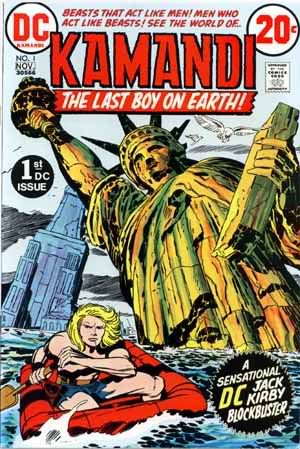
It’s a familiar theme for science-fiction fans: all civilization and the entire human race is destroyed by conflict or disaster. Then intelligent animals arise to dominate the world. But soon those new masters of the Earth begin making the same mistakes as their human predecessors. Of course, The Planet of the Apes is probably the most famous example of such stories, the novel and both the original 1968 film starring Charlton Heston (co-authored by Twilight Zone’s Rod Serling) and the crazy-fast-action Tim Burton remake of a few years back. Comic book fans may also recall Jack Kirby’s long-running DC series Kamandi – The Last Boy On Earth, where "Beasts Act Like Men! Men Act Like Beasts!"
Strangely enough, the post-human era is presented once again, this time in a wonderful trilogy of children’s books by Jon Buller and Susan Schade: The Fog Mound adventures. It’s first-class science fiction for children, though I should mention that there are some scenes of cruelty and violence between the animal characters, and, in the third volume, Thelonius and his friends have a frightening encounter with Upsilon the Wolfman, and must listen to the “crunching of small bones” as the scary beast and his companions dine. However, throughout the stories the animal characters display real compassion and loving care towards each other, and they often reminded me of the rabbits in Watership Down, another favorite "furry" book.

But be warned: As I found out, these books are so good that if you read them to children at bedtime, as I did for my son, Ronnie, they will not want to go to sleep. They will beg you to keep reading and reading these fascinating adventures.

In the first volume we meet the story's hero, Thelonious Chipmunk.

Thelonious Chipmunk is a Talker -- an animal who has inherited the gift of language from his ancestors -- and he, for one, believes in humans. Who else could have made the old paper postcard he treasures? Who else could have built the tall building shown on the postcard? His desire to know more about the humans is fulfilled in a surprising and dangerous way when Thelonious is swept down the river into a strange new world -- a world of architectural ruins and puzzling artifacts, where gangs and warlords prowl amongst the crumbling remains of civilization. With three new companions -- a bear, a porcupine, and a small brown lizard -- Thelonious embarks on a search for the far-off Fog Mound. It is a journey that becomes nothing less than a quest to uncover the secrets of Earth's past.

After living on the Fog Mound for quite some time, Thelonious Chipmunk and his friends are ready to continue their travels. There are some old questions to be answered and new places to be explored. So, with the addition of new friends Bill the Human and Cluid Chipmunk, the animals sail off down the river in a specially designed boat. As in The Travels of Thelonious, the intrepid chipmunk pursues his personal quest to uncover the differences between legend and history. And to answer the most troubling question of all — what happened to the humans?

Thelonious Chipmunk and his friends face a whole new series of adventures after they reach the mysterious Mattakeunk Institute and discover . . . a time machine! Will the time machine lead them to the answers they seek? Perhaps some of the answers will come when the animals' traveling companion, Bill the Human, regains his ability to speak. However there is one pressing need above all others -- the need to save their beloved Fog Mound from the Dragon Lady herself, and her evil ratmink assistants.

-quoted from Simon and Schuster Books for Young Readers


D’os Vadanya,

VIKTOR KUPRIN


Technorati tags: , , , , , , ,

Labels: , , , ,

Sunday, November 09, 2008

WindyCon, Building a Military SF Library, and Freehold

Next weekend I will be attending the WindyCon 35 science-fiction convention in Chicago. The event’s theme is military science fiction, and Baen Books’ John Ringo is the guest of honor, along with author Eric Flint, Star Trek’s and Babylon 5’s Walter Koenig, and artist David Mattingly.


I’m a Cold War veteran, and I spent most of my hitch in the Strategic Air Command’s 22nd Heavy Bomber Wing. And like most veterans, I learned pretty quickly that the old adage that advises “Don’t volunteer for anything!” is essential unless you want to subject yourself to dreadful humiliation or great risk. So, when I logged on the WindyCon site to make some suggestions for panel discussion topics, I had no idea that I was, in fact, volunteering to be a panel member. But that’s what happened, and I’ll be participating in the panel about Building a Military SF Library - What are the great books of military SF? What does any aspiring military SF writer need to have in a reference collection? Panelists tell you.

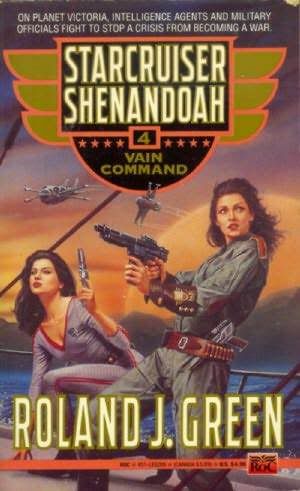
The session is scheduled for Saturday at 7 p.m., Nov. 15, in Ballroom C (C6, to be exact). While it’s a totally unexpected privilege for me, and my first time to be on a convention panel, I’m very honored and happy that Roland J. Green, the author of some of my all-time favorite military science-fiction series (Starcruiser Shenandoah, The Peacekeepers) will also be a panel participant.

On Friday evening I don’t want to miss the panel discussion titled Liberal Military SF: Does It Exist? - Can a writer be a liberal and a military SF writer? Is there something in military SF that requires a conservative outlook? Not counting the revolutionaries, are there any good portrayals of liberals in the genre?

Somehow I’m not surprised that Michael “Mad Mike” Z. Williamson will be a panelist on that one. Mad Mike almost got me in trouble in 2005 while I was living in Armenia. I was enjoying myself in an Internet café in the capitol city of Yerevan and, thanks to the Baen Free Library, I came across Williamson’s first novel, Freehold. To be generous I will just say that I didn’t like it much. The libertarian paradise it portrayed was as unbelievable to me as any Soviet propaganda about a future world of “pure communism”. But that’s not what almost got me into an unpleasant situation. The adult content in Freehold did. In fact, I think Williamson went way, way beyond erotica and crossed the line into pornography with his detailed descriptions of lesbian and group sex acts by the novel’s characters.

And, in Armenia, possessing, reading, and downloading pornography can get you into big, big trouble. Trouble like the interior of an old Soviet prison cell. And, quite frankly, I didn’t expect content like that when I started reading the story. Baen’s other online stories contain nothing like what I saw in Williamson’s book.

Lucky for me, the Internet café proprietors and their up-stream service providers didn’t detect the lewd text and, yes, they do monitor and sometimes block adult content in Armenia and in many of the other post-Soviet Republics. No militsia thugs wearing big CCCP service caps appeared to beat me up, extort money, or haul me to KGB headquarters. But it did put me off of reading any more of Williamson’s books. I’ve seen his comments that say “It was my first novel. I’ve learned a lot since then,” but, on his own website, his response to the subject of the controversial sexual content in Freehold is pretty flip.

I got a bad feeling, too, about such sexually explicit content being available on Baen’s online library with no warning, no disclaimer, no parental advisory, and, as a parent, that gives me the creeps.

Earlier this year, at Dayton’s Marcon sf convention, I told Baen publisher Toni Weisskopf about my experience in Armenia and my concerns. She urged me to give Mad Mike another try, to read some of his later work, but first impressions are lasting ones. And I have too many good books from other authors on my to-read list, thank you all the same.

Until next time, D’os Vadanya,

VIKTOR KUPRIN

Labels: , , , , , ,

Sunday, October 26, 2008

The War of the Worlds - An American Halloween Tradition

In the First World War, and for the first time in the history of man, nations combined to fight against nations using the crude weapons of those days. The Second World War involved every continent on the globe, and men turned to science for new devices of warfare, which reached an unparalleled peak in their capacity for destruction. And now, fought with the terrible weapons of super-science, menacing all mankind and every creature on the Earth comes the War of the Worlds!

Autumn is here and Halloween is nigh. And for science-fiction fans, one very American tradition during "All Hallows' Eve" is H.G. Wells' classic novel of alien invasion, The War of the Worlds. Seventy years ago, on October 30, 1938, the late, great actor and film producer/director Orson Welles and his Mercury Theatre On The Air played one heck of a trick-or-treat with their radio dramatization of the story, causing panic and alarm across the United States. Using a "we interrupt this broadcast to give you an important announcement" newscast style, Welles and company made many people believe that Martians (or perhaps Germans) were actually attacking. Newspapers of that era, hostile to the upcoming broadcasting industry, played up the unintentional effects of the broadcast, and there were many unsubstantiated, anecdotal accounts of people preparing to commit suicide rather than risk death from Martian heat rays or poison gas attacks. But there were very real accounts of genuinely frightened citizens, flooded telephone switchboards, and some people actually getting their firearms ready to defend their homes and communities. The next day a very shaken Orson Welles had to explain that the resulting panic was unintentional, and CBS made a public promise to never again use the words "We interrupt this broadcast" in any future entertainment program on radio.

In the early 1960's my father was a sometimes attendee at meetings of the Indiana Recording Club, whose members used big reel-to-reel tape recorders to copy and swap many old radio programs from the 1930's and 40's. I had the rare privilege of hearing Orson Welles' War of the Worlds when I was a kid, though the third-generation recording was pretty awful in quality. Modern digital technology has greatly improved existing recordings of that historic broadcast. You can hear it online at the Internet Archive:
http://www.archive.org/details/WAROFTHEWORLDS2

The latest version of The War of the Worlds was Steven Spielberg's 2005 film, which I first saw while in Armenia. My teenage nephew from Moscow, Serosha, and I celebrated the 4th of July by going to the small digital theater in Vanadzor to see a Russian-dubbed version. Spielberg took ample liberties with the original story, many of which just didn't work for me, like the Martian war machines being buried long-ago under the earth as weapons caches. And the appearance of the Martians themselves was disappointing, rather like diminished versions of the Independence Day aliens. But there are some very effective scenes in Spielberg's film, my favorite being the first appearance and ascension of the Martian tripod war machine in the town square. Harkening back to the original Wells' steampunk-like machine, the towering invader emits puffs of steam-like gas, and slowly shifts its weight on its three metal legs. As Tom Cruise and the downtown crowd start to come out of their hiding places to get a better look at the amazing sight, again as in Wells' original story, the Martian war machine exhults, blasting sinister music-like basso profundo notes the likes of which I haven't heard since I attended a Black Sabbath concert some years ago. Everyone on screen jumps when the machine unexpectedly sounds off, and I confess that it made me feel a real chill up my spine.

I enjoyed Spielberg's film, uneven though it was, but my all-time favorite is George Pal's 1953 Oscar-winning version of The War of the Worlds, certainly one of the very best science-fiction films made in the 50's. The film was directed by Byron Haskin, who would later direct another of my favorite science-fiction films, Robinson Crusoe on Mars. In Pal's film, the invasion takes place during the 1950's. Pal and art director Albert Nozaki placed the Martians in sleek, futuristic manta-ray shaped war machines that hovered above the ground on invisible legs of magnetic flux. Modern science-fiction elements were added to the plot with great effect, such as the Martians generating atomic energy "without the heavy shielding we use" as the source of their weapon's power. Radioactivity is detected not long after the first Martian cylinder falls from the sky, an ominous omen of what is soon to come. When the Martians first shoot their atomic-powered heat ray, an electronic-magnetic pulse knocks out electric power, telephone lines, and even magnetizes the watches worn by the nearby towns' people. And though Pal didn't use tripod war machines in his film, the trinary nature of the Martians was emphasized throughout the story: the Martians are shown to have three fingers; their eyes and electronic cameras have three irises that are colored red, green, and blue; and the Martian war machines always operate in groups of three.

The film begins with a virtual tour of the solar system, beautifully illustrated with the artwork of Chesley Bonestell, the famous space illustrator. And the accompanying narration was done by Sir Cedric Hardwicke, whose British accent is most fitting for this retelling of Wells' story. One of the first scenes is a view of a Martian city alongside frozen water canals. I always yearned to see a close up, but we only get a distant view.

The stars of the film were Gene Barry in the role of Pacific Tech scientist Dr. Clayton Forrester, and the very beautiful Ann Robinson, who was only 17 years old at the time! Barry would later be remembered for his starring roles in the TV western series Bat Masterson, and in following years as the lead role in Burke's Law. Some reviewers are critical of Barry's acting, but I enjoyed his performance in The War of the Worlds. You can hear a little bit of mad scientist in his voice as he's watching the Martian war machines slowly rise up from their landing zone and gleefully whispers, "This is amazing!" I thought so, too, when I first saw the silvery Martian machines. During the initial Martian attack, Barry and the commanding Army officer, General Mann, see the Martian's disintegrating "skeleton beam" for the first time. Barry really got me when he grabs General Mann and desperately explains:

"It neutralizes mesons somehow. They're the atomic glue holding matter together. Cut across their lines of magnetic force and any object will simply cease to exist! Take my word for it, General, this type of defense is useless against that kind of power! You'd better let Washington know, fast!"

Major General Mann was played by Les Tremayne, whose career in radio, television, and film spanned over 50 years. His performance as the frustrated commander of the futile west coast defense efforts against the Martians is dead on. While serving in the U.S. Air Force, I met more than one General Mann in my time, believe me! In one of my favorite scenes, Mann is shown briefing the U.S. Secretary of Defense and a team of military commanders from around the world:

"This much is certain. It is vital to prevent the Martian machines from linking up. Once they do, they adopt an extraordinary military tactic. They form a crescent. They anchor it at one end, sweep on, until they've cleared a quadrant. Then they anchor the opposite end, and reverse direction. They slash across country like scythes, wiping out everything that's trying to get away from them."

Mann shows detailed photographs of the original Martian landing zone, now developed into a full-fledged base. Finally, after a silent pause, the Secretary of Defense nods thoughtfully and says:

"All right, I've seen enough. There's only one thing that will stop the Martians. We've held back because of the dangers of radiation to civilians. Now we have no choice. The White House will confirm the order to use the atom bomb."

Pal selected a perfect symbol of the 1950s jet-age era in his film when he used footage of the Northrup YB-49 Flying Wing jet aircraft as the bomber chosen to drop the A-bomb on the Martians. Though the plane was way ahead of its time and was never put into production, seeing the big wing as the last hope for civilization was a great touch for the film.

There has been some criticism of the religious elements in Pal's film, but I always thought they were done tastefully and display a touch of compassion in such a grim story. When the Martians' first landing zone is surrounded by Marine and Army forces, the nearby town priest, Father Matthew, played so very well by actor Lewis Martin, pleads with the military commander to make an effort to show that we mean the Martians no harm, that war is not necessary. Unsuccessful, Father Matthew quietly slips away from the command post and sets out toward the advancing Martian war machines on his own. He recites the Lord's Prayer as he walks, and holds up a pocket bible to show the Martians the cross on its cover. This scene always impressed me greatly because we can see the fear on Father Matthew's face, the knowledge that he is, indeed, walking through the valley of the shadow of death, but that his Christian faith compels him to make the effort.

Another scene, a brief one that always touchs me is when Gene Barry is desperately going from church to church looking for Sylvia as Los Angeles comes under direct attack by the Martians. Inside the churches we see the elderly, the poor, and, many times, immigrants whom I always imagined didn't have automobiles and couldn't flee from the oncoming menace. Not finding Sylvia in a Catholic church, Barry turns to leave but is stopped at the door by a kindly church elder who says, "Don't go, son. Stay here with us." It's a minor scene, but this simple, compassionate moment is one that stands out in the movie, for me anyway. It's clear that the refugees in the church believe they will soon be killed, and that the elder's kind invitation really means, "Don't die out in the street alone." A dazed Barry quietly explains how he's searching for someone and then moves on through the burning streets as the Martian machines enter the city.

In another scene touching on religious faith, just before the A-bomb is dropped on the Martians, a scientist tells Barry and Robinson that he's calculated that the Martians will be able to conquer the Earth in six days. Robinson replies, "The same number of days it took God to create it." The group of scientists pauses in quiet reflection at this very chilling biblical reference.

George Pal paid tribute to Orson Welles' 1938 War of the Worlds broadcast by including cameo appearances in his film of characters from Welles' script. At the first Martian landing zone, a radio station reporter named Carl Phillips describes the scene for radio listeners, just like in the radio play. And later, again on radio, a scientist named Drew Pearson, the name of Welles' character in the original broadcast, makes comments about the possible physical appearance and nature of the Martians.

Director Byron Haskin and art director Nozaki worked together again in 1963 on another outstanding Mars film, Robinson Crusoe on Mars. And if you watch it, you will see Nozaki's original Martian machine design, recycled but without the cobra-like heat ray, this time as the supersonic, automated machines used by the interstellar miners on the Red Planet.
The 1938 War of the Worlds broadcast is sometimes replayed on radio during Halloween, and many radio stations and theater groups perform new versions of the story at this time of year. But if you'd like a real science-fiction treat for this All Hallow's Eve, I urge you to watch the 1953 film version.

Happy Halloween,

VIKTOR KUPRIN

P.S. Earlier this year when I was visiting Armenia again I took my DVD of George Pal's War of the Worlds. It had never before been shown in the Soviet Union. At the end of a screening of the film for families and neighbors, I heard the Armenians saying "Grip. Grip," the Armenian word for influenza! If you read the book or watch the films, you'll know why.

Technorati tags: , , , , ,

Labels: , , , , , , ,

Friday, October 10, 2008

Science Fiction for Kids: Captain Raptor

Every evening I hear a little voice call out, "Dad, it's reading time!" My six-year-old son, Ronnie, loves books and, I'm proud to say, he's well on the way to becoming a reader himself. For his first grade reading assignments, he has successfully tackled a book of Amelia Bedelia adventures and one of The Littles fantasy books.

But even after a hard hour of sounding out new words and struggling with new sentence structures, at 9 p.m. Ronnie always demands our family tradition of a bedtime story (or two, or three).

One of our most enjoyable readings was the two Captain Raptor books, written by Kevin O'Malley and brilliantly illustrated by Patrick O'Brien. Combine Jurassic Park and Star Wars, and you can begin to understand these wonderful children's books.
The planet Jurassica is populated by intelligent, space-faring dinosaurs, defended by the courageous Captain Raptor and crew: navigator Threetoe, professor Angleoptorous, and Master Sargeant Brichthorous. Their rocketship, The Megatooth, is a beauty: a classic 1950's von Braun-style streamliner that reminds me a little bit of the Russian Tupolev-22 Blinder supersonic bomber jet.

Captain Raptor and the Space Pirates has the valiant dinosaur heroes recovering their world's royal jewels from Bloody Bart Scalawag and his cutthroat space crew. But my favorite is Captain Raptor and the Moon Mystery, in which the dinos have an interesting-but-cautious first encounter with human astronauts from Earth.

For kids who love dinosaurs and/or space stories (and these days that mostly likely means Star Wars), then the Captain Raptor books will surely please. While the stories are definitely for children, I truly enjoyed O'Brien's detailed, striking illustrations which can be appreciated by anyone interested in comic book art. You don't see many rocketships as cool as the Megatooth.

And here's my favorite dinosaur lover, Ronnie, at Dinosaur World in Cave City, Kentucky. Watch out, son!

D'os Vadanya,

VIKTOR KUPRIN


Technorati tags: , , , , ,

Labels: , , ,

The Great Planetary Robbery

I'm a total sucker for spaceships. If a book has a starship or even a rocket ship on its cover, I can't help myself. I must pick it up and check it out. The only exceptions for my spaceship mania are all those godawful Star Trek paperbacks which, more often or not, are a shameful waste of good paper. I love the TV shows and the movies, but I absolutely abhor the Trek books.

My spaceship mania paid off recently when I discovered The Great Planetary Robbery by Craig DiLouie, an entertaining space-opera comedy with a touch of military science-fiction, too. The story reminded me very much of some of the classic Traveller role-playing scenarios where a band of rag-tag space voyagers set off into the galaxy to seek their fame and fortune.

Near the end of their service careers, Colonial Space Marine NCOs Lawrence Dobbs and Timothy Muldoon organize a motley team of adventurers on a private mission to a legendary lost world abundant with riches. Their career hitches are actually over 800 years long due to the effects of star travel's time dilation. Along the way, Dobbs and Muldoon come up against a whacked-out hacker and his computer viruses, a combat assassin android named Bova, galactic bounty hunters, millions of hostile aliens, and the insane AI simulacrum of the emperor of a long-extinct enemy alien civilization.

The Great Planetary Robbery is a lot of fun, and I hope author DiLouie will let us continue to follow Dobbs and Muldoon in more cosmic hijinks … in the future.

D'os Vadanya,

VIKTOR KUPRIN

Technorati tags: , , , , , , ,

Labels: , , , ,

Saturday, September 27, 2008

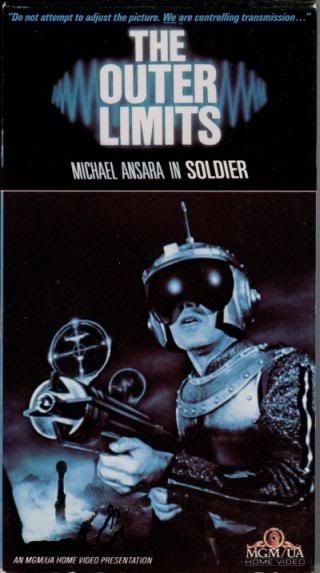
Soldier - The Outer Limits


While clearing out some of my old VHS tapes, I ran across my favorite episode from the original Outer Limits TV series: Soldier. I watched this outstanding hour-long show when it was originally broadcast on September 19, 1964. It is unforgettable. Written by Harlan Ellison, the tale begins in the far future when the Earth is a desolate, war-torn planet. A soldier in battle helmet, armed with a distintegrator rifle, pauses for a smoke break. But not for long. His helmet starts issuing audio commands: "Find the Enemy! Attack! Kill!" Not far away is another soldier-of-the-future in similar armor, and in minutes the two adversaries are charging toward each other. But as they collide, two artillery-like energy beams cross at their exact location, throwing both troopers into a time warp that transports them back to 1964. The first soldier reappears in a back alley of some large American metropolitan area, and he soon draws attention from startled passersby. Then the police arrive and start to advance towards him. He raises his blaster rifle and vaporizes their police car with a single shot.

Finally taken prisoner and sequestered in a government holding facility, the rest of the tale shows how the puzzled officials interrogate and, finally, correctly identify just what the dangerous visitor is: the ultimate infantry soldier.

The second soldier remains trapped in the time-warp flux, unable to free himself until much later in the story. But when he does, the mission imperative remains: "Find the Enemy! Attack! Kill!"

Michael Ansara played the role of the first soldier from the future, Qarlo Cobregnny, and was well known to TV audiences in 1964 from the western TV series Broken Arrow, in which he starred as the stoic Apache Indian chief Cochise.

Soldier is filled with wonderful science-fiction details like self-igniting cigarettes, reports that Qarlo's disintegrator rifle continues to function even when parts are removed from it (advanced quantum physics?), and Qarlo attempting to verbally report to a pet cat because felines are used as recon scouts on the battlefields of the future. It is a one of the earliest and finest examples of military science fiction to appear on TV, in glorious black-and-white.

A bit of trivia: Qarlo's battle helmet would reappear 14 years later, worn by Robin Williams in the goofy 1978 TV comedy series Mork & Mindy! Fact is, in 1964 I had a toy helmet similar to Qarlo's: the now-rare Monkey Division visored helmet!

D'os Vadanya,

VIKTOR KUPRIN


Technorati tags: , , , , , , ,

Labels: , , , ,

Saturday, August 02, 2008

Eclipse Comics' Fusion

Every Saturday afternoon Ronnie, my six-year-old son, and I attend the kid's matinee at The Cinemat, Bloomington's great DVD-video rental and screening room. Hosted by The Kick, our town's one-and-only superhero sidekick, the classic cartoons and old-time movie serials are fun for both of us, though Ronnie has a tough time choosing his free toy from The Kick's treasure chest of gifts for the kiddos.

After the show we sometimes have a little time to kill before catching the bus home, so we head down the block to Vintage Phoenix, Bloomington's wonderful comic shop, located just off the downtown square. While browsing through the 25-cent back-issue bins, I found a couple of copies of Eclipse Comics' 1987-89 Fusion, a delightful science-fiction/space opera series that on first reading had some similarities to the popular Firefly TV show except with some funny furry characters as part of the crew.

Science-fiction has always been a tough sell for comics, with superheroes, horror, and comedy being the mainstay. Some notable exceptions would be England's Dan Dare, King Features' outstanding 1960s Flash Gordon series, Gold Key's Magnus Robot Fighter, and sci-fi/superhero hybrids like DC's Adam Strange. I've always thought that much of the popularity and success of Marvel's Fantastic Four, Mighty Thor, Iron Man, and other Silver Age comics stemmed from their distinctive science-fiction elements.

It was a nice surprise to discover Fusion, and I hope that in time I can find the other back issues. While my son prefers the latest publications of Transformers: The Animated Series, I am enjoying the space adventures of the Tsunami crew.


From the Wiki:

Fusion was a comic book published in 1987 by Eclipse Comics, whose creative team included the writer Steven Barnes, the artists Lela Dowling and Steve Gallacci, conceptual editor Lex Nakashima and many more.

The world of Fusion is centuries in our future, when a series of galactic wars have led to a spiraling arms race between "tekkers and splicers" - that is, between those who take a technological and technocratic route to improving humanity, and those who have abandoned humanity altogether through genetic engineering. The story involves the exploits of a group of space mercenaries in an era when humans who have not been enhanced either genetically or cybernetically, are becoming extremely rare.

While the comic book also included inserted comics of some variety, such as Dr. Watchstop, the most frequent insert was Weasel Patrol, a comic stemming from doodles drawn of Tan.

Regular characters
The only recurring characters are the crew of the mercenary spaceship Tsunami.

Indio Tremaine: Captain. Human. Born into the Clan of the Three Suns, of which she is the only survivor.
Dow Cook: Synthetic human bio-engineered invulnerable to shock and trauma and with enhanced self-healing ability. Very insecure about himself.
Tan: A musteliform bred from Terran otter stock. Canadian, an alumnus of Labatt's Tech (a fictitious university named after the beer). An alcoholic mechanical and electronics wizard with a severe gambling problem. Never goes anywhere without his leather pilot cap and goggles.
Beolvoch: A meehook. Something like a dinosaur with feathers. Has an extremely high metabolic rate and thus a voracious appetite for raw meat. Must eat regularly and copiously to stay active. Consequently spends much time in a suspended animation state or complaining that he is hungry. Appears to be a genuine alien species rather than uplifted and genetically engineered earthform.
Alshain: A felinoid; a temperamental and somewhat edgy pilot.
Carz: A leoniform with only one working eye. He is generally a steadying influence, but when he loses it, beware!
Herrick: A hawklike creature, of military caste. Dies very early in the series, in one of many moves which went against formula. Appears in "how we got here" sequences.
Haven: A birdlike creature with well developed nesting instincts. She is a doctor by training.
Eddie: Modelled after some creature with very long ears and a prehensile tail. Likes to hang upside down. A cool dude in shades and khakis or hawaiian shirts. Nothing rattles Eddie. Was a classmate of Tan at Labatt's.

D’os Vadanya,

VIKTOR KUPRIN


Photobucket

Technorati tags: , , , , , ,

Labels: , , , , ,

Thursday, June 26, 2008

Summer Reading List and Time Off

I survived the terrible weather and floods that devastated so much of southern Indiana, though my dear wifey did the splits on a wet kitchen floor after the deluge. And I've just learned that I will be getting an unexpected summer break due to the fact that I'm headed to surgery tomorrow. The diagnosis is a double (!) hernia, probably from lifting some heavy computer gear at work. Except for the removal of an infected lymph node many, many years ago due to Cat Scratch Fever (but not the kind Ted Nugent sang about), I've never had surgery or undergone general anesthesia. It will be a new experience for me.

And while I'm flat on my back in recovery, I'll be reading these books, my early-summer reading list:

TWO OF MINDS by William H. Keith Jr., set in the Wizard's of the Coast Alternity universe. Bill is one of my favorite authors, and is well-known by gamers for his art and fiction that defined the first edition of the Traveller SF role-playing game. This novel has a strong "Traveller" feel to it, and the area of space called "The Verge" is an interesting though dark and dangerous setting.


STRONG-ARM TACTICS by Jodie Lynn Nye. Published by the now-defunct Meisha Merlin, I found a copy of this laced-with-humor milfic novel at my local library. I had the pleasure to briefly meet Jodie at the recent Duckon SF convention, but was totally embarassed when I had to leave her Writing Narrative Hooks workshop before it was over. In my defense, my dear wifey had re-injured her leg while lifting luggage in our hotel room and needed my help in the worst way, so it really, really was an emergency. Family comes first, of course, but I still felt awful about having to bug out as I did. Sorry, Jodie.


THE ETERNITY ARTIFACT by L.E. Modesitt Jr.. I love first contact stories and this tale of an extra-galactic expedition to study an artificially-propelled planetoid created by aliens is my kind of story.


HAL SPACEJOCK by Simon Haynes. For the fun of it, this Australian SF comedy series is perfect for a relaxing summer read. The first of four novels about this clutzy space adventurer is available as a free download at HS Hal Spacejock.


Before going through my pre-surgery tests yesterday, I had some time waiting in the hospital lounge. To my delight I found a copy of The Best From Galaxy Volume IV, edited by Jim Baen, resting on an end table as if it was waiting for me to come pick it up. There was even two Jerry Pournelle stories inside: Tinker, a short tale about life in the Asteroid belt, and a non-fiction piece about life in space. I hope this is a good omen for my upcoming time under the surgeon's knife.


Viktor Kuprin

Technorati tags: , , , , , , , ,

Labels: , , , , , , ,

Friday, May 30, 2008

Marcon, William H. Keith, and now on DVD: The Invaders - Season 1

The Marcon SF convention in Columbus, Ohio, was great fun last weekend, though everyone was saddened by the unexpected death of author guest-of-honor Robert Asprin just before the event. Though I was not a reader of his work, I join everyone who mourn his passing. A lesser disappointment for my six-year-old son was the lack of a swimming pool at the downtown Hyatt hotel, but otherwise it was an excellent con.

William H. Keith - Author and Artist

The highlight of the convention for me was getting to meet author and artist William H. Keith Jr., whose work I have followed more years than I care to admit. Bill has had over 80 books published, plus short stories, role-playing games, source books, and lots of fantastic SF art for the Traveller SF role-playing game. Along with his late brother, Andrew Keith, Bill was responsible for much of the "look" of Traveller, and his spacecraft designs are some of my favorites. I was very happy to see some dazzling prints of Bill's graphics at the Marcon art show, and I managed to come home with a great piece by Bill depicting a "Retro Launch" rocket boosting into space. Fact is, I'm in the middle of reading Bill's latest military SF novel, Star Strike, done under the penname of Ian Douglas. His military techno-thrillers (Silent Service; Seals, The Warrior Breed) are done under the H. Jay Riker moniker. Bill is scheduled to appear at Pittsburgh's Confluence con, July 25-27, and if the planetary orbits line up just right, I may make it there, too.

The Invaders - Season 1

The Invaders, alien beings from a dying planet. Their destination: the Earth. Their purpose: to make it their world. David Vincent has seen them. For him, it began one lost night on a lonely country road, looking for a shortcut that he never found. It began with a closed deserted diner, and a man too long without sleep to continue his journey. It began with the landing of a craft from another galaxy. Now David Vincent knows that the Invaders are here, that they have taken human form. Somehow he must convince a disbelieving world that the nightmare has already begun.

That was how each episode of the 1967-68 SF-horror series The Invaders started, and I'm very happy to report that the first season of that classic Quinn-Martin production was released on DVD this week. Dominic Frontiere's eerie soundtrack still gives me chills. He also scored the original opening and closing themes for The Outer Limits, another sixties SF-horror classic. The Invaders featured ruthless aliens (disguised as humans), great hardware (flying saucers, disintegrator pistols, and the "cerebral hemorrhage" disc weapon), suspenseful stories, and fine actors. I remember watching the episode where guest star Michael Rennie, from The Day The Earth Stood Still, played the role of an important alien leader, a real touch of class by the program's casting director. And though subtle compared to modern standards, I remember many scenes involving the disguised aliens that were very frightening. David Vincent might notice the tell-tale imperfect pinky finger of an alien-in-disguise, the eerie alien theme music would play, and the expressionless alien would make eye contact with Vincent, look directly into the camera. Scenes like that scared the bejeezus out of me more than once when I was a kid, I shamelessly admit. Roy Thinnes, the show's star, was often panned by the critics, but I was always impressed by his serious-as-hell, on-the-edge performance as one man unintentionally made aware of a covert invasion by cold, murderous aliens. Bravo to Paramount for releasing The Invaders on DVD. It's certainly one of the best American SF television series made in the sixties.

D'os Vadanya,

Viktor Kuprin

Technorati tags: , , , , , , , , , ,

Labels: , , , , , , , , , ,

Wednesday, April 23, 2008

2008 Science-Fiction Conventions

The dogwood and redbud trees are in bloom here in Indiana, and spring weather at long last has arrived. And so it's time for me to plan some trips to science-fiction conventions. Last year I made it to DucKon, Context, and Conglomeration, and had a good time at all of them. I missed this year's Conglomeration due to family activities, but I hope to make it to Marcon and WindyCon for the first time, as well as DucKon 17 and Context 21.

One convention that I intentionally boycott is Indianapolis' InConjunction. Some years ago my young daughter and I witnessed some very embarassing and UN-family friendly activities being performed in plain view, in public, during major events at that convention. The people running the convention were fully aware of what was going but did nothing. So I won't go back, even though my daughter is grown now, no longer "in tow" as they say at the cons.

Here are some links to the con sites. I hope to see you there!


VIKTOR KUPRIN


Technorati tags: , , , , , , , , ,

Labels: , , , ,

Wednesday, March 05, 2008

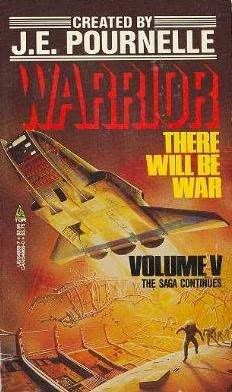
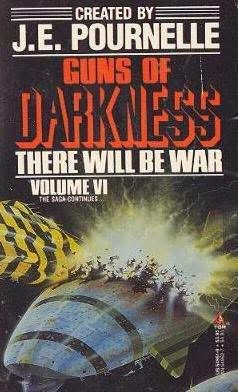
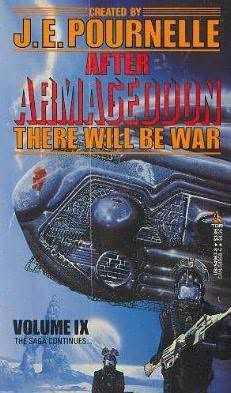
Jerry Pournelle's There Will Be War

From the Associated Press
4-March-2008

WASHINGTON, D.C.

Congressional Democrats are taking a closer look at the U.S. missile defense program, partly in an effort to pare down its high price tag.

The Democrats are raising questions about the effectiveness of the anti-missile program and investigating whether its testing regimen is realistic enough to demonstrate its capabilities against real attacks.

Critics have long contended that the program's tests are too predictable.

The scrutiny comes as the United States is at a sensitive moment in negotiations with Poland and the Czech Republic to build part of its shield on their territory. Lawmakers are questioning the security value of those plans against stark opposition from Russia.


That story in yesterday's news is very timely for me because I've been reviewing some of the past works of one of my favorite authors: Jerry Pournelle. The Mote In God's Eye by Larry Niven and Jerry Pournelle is probably my all-time favorite science fiction novel, undoubtedly one of the best first contact stories ever written. I first read it in 1975 while stationed at March Air Force Base in sunny, southern California. That was when the Cold War was heating up again as the Soviet Union built up its military forces to alarming levels. My unit was a B-52 bomber wing, part of the Strategic Air Command, and I always thought my modest contribution to national defense had some merit. I felt that way because I knew that somewhere in Siberia there was probably some Russian gomer much like me assigned to their Long-Range Aviation, at some Tu-95 Bear bomber base.

One thing about Jerry Pournelle: he hated strategic deterrence, the whole concept of Mutually Assured Destruction, gleefully called MAD by its detractors. The idea of two superpowers pointing their nuclear weapons at each other with no real defense against them did make for some awful nightmares and many a good science fiction story. But (I believe) it kept the peace. It worked. I will always believe that the stakes of that awful game had to be high to keep it honest, else one side or the other would get the notion that a nuclear war was somehow justifiable, or winnable.

History has not been kind for much of Jerry Pournelle's written works, but they are still a great pleasure to read. I consider his CoDominion stories to be some of the best, a future history where the USA and USSR grudgingly join to share world control, stifle scientific research and development, and, much later on, have an amazing encounter with "intelligent life from off the Earth," to quote Dr. Haywood Floyd in 2001: A Space Odyssey.

Over the past few weeks I've been reading some of Jerry Pournelle's There Will Be War book series, which was co-edited by John F. Carr. Filled with collected short stories, poetry, and political essays by various authors, the series served as a bully pulpit for Jerry and his conservative views. One common theme was his call for the construction of the original Strategic Defense Initiative (SDI), often referred to as "Star Wars" during the Reagan era. In almost every issue of There Will Be War, Jerry would demand a crash development program for anti-missile lasers, interceptor missiles, "brilliant pebbles" orbital weapons and such, so that the US would move away from Mutually Assured Destruction to an Assured Survival defense against Soviet nuclear weapons. To be frank, I never believed it would work for the main reason that so much of SDI would be easily thwarted with countermeasures, decoys, and other inexpensive, low-tech alternatives. And, of course, it never had to be because the Soviet Union imploded and ceased to be.

I am still skeptical when I read about the recent anti-missile test shots firing out of Kwajalein, and I surely don't want the US to spend billions of dollars for an anti-missile defense that may or may not work as advertised. Do we really need to spend mega-billions to counter a dubious threat from North Korea or Iran? Surely there's far better ways to spend those Pentagon dollars, perhaps in Afghanistan. And, I'm glad to report, my unit, the 22nd Bombardment Wing (Heavy) is no more. The huge B-52 D models are scrapped in the bone yard, while the 22nd carries on as an in-flight refueling unit. I'm glad because I know that somewhere in western Siberia, a Russian Long-Range Aviation unit was also deactivated, its Tupolev 95 Bear bombers chopped into segments as scrap, its doomsday weapons taken offline, stored, and hopefully, dismantled. I'm glad because I know, without a doubt, that both my wife's family in the East and my own family in the West are a little bit safer as a result.

Viktor Kuprin


P.S. While attending the DuckCon science fiction convention last year, I was present for a panel discussion about World Building in Fiction hosted by Alan Dean Foster, Roland J. Green, and other distinguished authors. During the event we were asked to pick one favorite book that we would choose to take if we were ever stranded on a desert island. My choice was The Mote In God's Eye, and I was doubly proud of my answer when I saw Alan Dean Foster smile and nod his head in understanding at my response. The late, great Robert A. Heinlein blurbed the cover of The Mote In God's Eye with these words: "Possibly the finest science fiction novel I have ever read." I wholeheartedly agree.

From the Wiki:

The Mote in God's Eye, by Larry Niven and Jerry Pournelle, is a science fiction novel that was first published in 1974. The story is set in the distant future of Pournelle's CoDominium universe, and charts the first contact between Mankind and an alien species. The title of the novel is a wordplay on Luke 6:41.

The book describes a complex alien civilization, the
Moties. The Moties are radically different (both physically and psychologically) from humanity in ways that become clearer over the course of the book. The human characters range from the typical hero-type in Captain Roderick Blaine to the much more ambiguous merchant prince and suspected traitor Horace Bury. Robert A. Heinlein, who gave the authors extensive, detailed advice on the novel, blurbed the story as "possibly the finest science fiction novel I have ever read".

The
novel is an example of hard science fiction in that close attention is paid to scientific detail. Larry Niven and Jerry Pournelle are noted for writing in this genre, and it is especially evident in this work with regard to the theoretical mechanics and physics of interplanetary travel. The book's Alderson Drive and Langston Field are literary inventions, but they are presented against a background of established science knowledge.

One interesting aspect of the novel — in comparison to other works of science fiction — is how the alien race's psychology is influenced by its physiology. Prior to this work, most aliens in science fiction would have a physiology radically different from human, but act and think in much the same way.

A sequel to The Mote in God's Eye, entitled
The Gripping Hand, was written by the same authors over twenty years later. It was published in the UK and other countries as The Moat Around Murcheson's Eye.


Technorati tags: , , , , , ,

Labels: , , , , ,

Sunday, January 20, 2008

The Traveller Novels of Jefferson P. Swycaffer

If a book has a picture of a spaceship on the cover, I can't resist picking it up. But more often than not I wind up putting it down because I've become quite discriminate in allocating my precious free time for reading. If the story's premise is too wacky or if the plot features unbelievable scenarios or characters who act like ill-behaved children, I will pass it by.

One of the benefits of my job at a large American university is having access to virtually any book, in or out of print, courtesy of the superb interlibrary loan system. During the holiday season I requested and received the now out-of-print works of Jefferson P. Swycaffer, who during the 1980s and early 90s authored two book series inspired by the classic Traveller science-fiction role-playing game.
Swycaffer's tales take place in the Concordat of Archive star federation, and incorporated lots of Traveller tech.

I've been a collector of Traveller-related games, books, and magazines since 1977, and though I've only actually played the game a handful of times, I have always enjoyed the Traveller universe as presented by its many publishers and authors. Usually I rejected the standard Traveller game scenario of a group of recently mustered-out star veterans or down-and-out star traders or smugglers, settings greatly inspired by Star Wars' Han Solo. My preference was always for Traveller characters to have access to some useful resources and first-class starships, so more often than not I would choose Star Navy characters on active duty for the few games I participated in. I was pleased that Swycaffer's novels presented mixed casts of both types of characters. And while his books' heroes and villains were, indeed, often portrayed as acting like immature adolescents, and I sometimes found myself quickly skimming over a chapter or two, I'm glad I read these seldomly-remembered tales set in a familiar universe.

My favorite was Not In Our Stars, a story about a world recovering from a limited nuclear war. Though Swycaffer seems to have been a member of the "we don't have to worry about a little radiation" writers' club that I see so often from convervatives like Dale Bond and the neocon Baen club, it was still an enjoyable read.

I love the covers of Swycaffer's books, and perhaps the most memorable is that of Warsprite, published by TSR Games, and not a part of his Traveller-inspired series.

Here's a bibliography if Swycaffer's Traveller novels:


Not In Our Stars, Avon Books, New York, USA, 1986.

Become the Hunted, Avon Books, New York, USA, 1985.

The Universal Prey, Avon Books, New York, USA, 1985.

The Praesidium of Archive, Avon Books, New York, USA, 1986.

The Empire's Legacy, New Infinities Productions Inc., 1988.

Voyage of the Planetslayer, New Infinities Productions Inc., 1988.

Revolt and Rebirth, New Infinities Productions Inc., 1988.

Finally, I should make a brief apology for my lack of blog posting since New Year's. My excuses are an extra-heavy workload since I gained an entire new department full of computers, plus I was busy contacting Senators, Congressmen, and the U.S. Embassy in Yerevan, Armenia, in a campaign to help my sister-in-law, Nona, get a hard-earned tourist visa so that she can visit the United States.

Residents of the former Soviet Union are almost never given permission to visit as tourists, but with the good help from my reps in Washington, Nona was finally successful, and she will arrive in two weeks for her first USA visit. Here's lovely Nona's pic, below. I think she should be Miss Armenia 2008. Nona had a profile on Match.com until the wankers at that company cancelled her account without explanation. She goes by the alias "Nonajan" online. Eat your hearts out, guys!


Do S'Vadaniya,

Viktor Kuprin


Welcome to the USA, NonaJan !


Technorati tags: , , , , , ,

Labels: , , , , ,